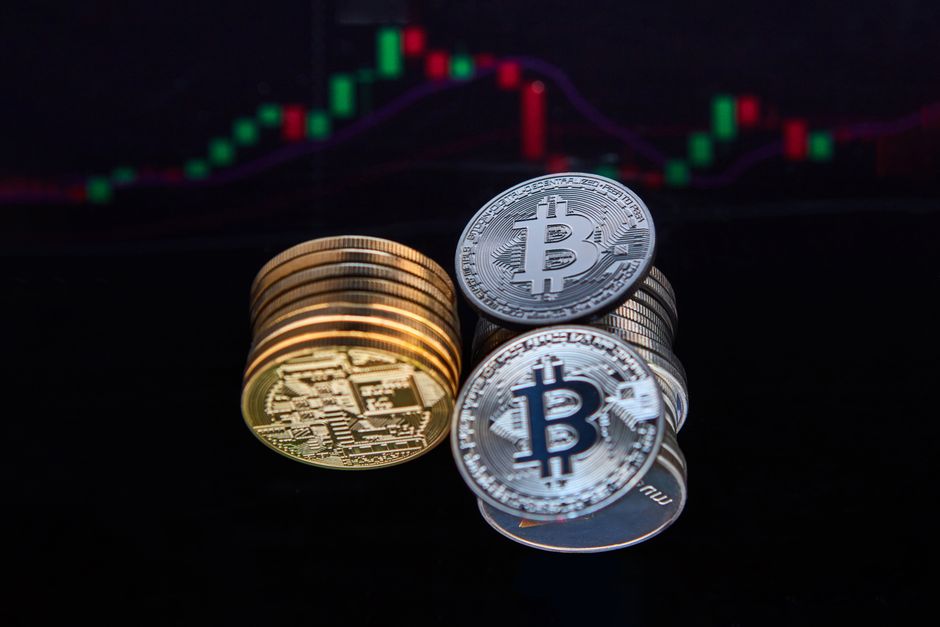
A geopolitical announcement triggers a wild price ride, revealing the complex web of oil, bonds, and digital gold that now defines Bitcoin's market behavior.
What to know
- Bitcoin surged back above the $70,000 level following an announcement from President Donald Trump regarding a temporary halt to planned strikes on Iran.
- The price action was intensely volatile, swinging from approximately $67,500 to $71,200 and back within a single trading session.
- Market analysis suggests that while Middle East tensions and oil supply fears provide the initial spark, bond market reactions—specifically yields in the US and Japan—are becoming the critical channel through which macro shocks reach crypto.
- The weekend preceding the bounce saw Bitcoin erase its prior weekly gains, falling below the key $70,000 threshold.
- The heightened volatility extracted a heavy toll, with leveraged traders collectively facing hundreds of millions in losses during the price swings.
- Concurrently, institutional interest persists, as evidenced by a European firm's letter of intent to acquire Bitcoin treasury companies, which would position it as a major holder.
- Broader crypto investment vehicles, such as exchange-traded funds, recorded net outflows last week amid the market pullback.
The Geopolitical Spark
It was a statement on Truth Social that lit the fuse. President Donald Trump declared that the United States had engaged in what he termed productive conversations with Iran, leading to a decision to postpone planned military strikes on Iranian power plants and energy infrastructure for five days.
The market's response was immediate and violent. Bitcoin, which had been trading below $70,000, rocketed upward, briefly piercing $71,200 before settling back near the $70,000 mark.
This rollercoaster ride underscored a now-familiar pattern: Bitcoin acts as a high-beta, liquid asset deeply attuned to shifts in global risk sentiment, particularly those emanating from the geopolitically volatile Middle East. The initial narrative is straightforward—threats to oil supply and regional stability drive investors toward perceived hedges and alternative stores of value. However, the weekend's price action, where Bitcoin fell and erased gains even as tensions simmered, hinted that the relationship is far more complex than a simple flight-to-safety trade.
Beyond the Barrel: The Bond Market Channel
While headlines focus on oil and geopolitics, a more nuanced financial narrative is taking hold. Analysts are increasingly pointing to sovereign bond markets, not crude oil futures, as the decisive transmission belt for macroeconomic shocks into the crypto ecosystem.
The reasoning is structural. Spikes in oil prices and geopolitical uncertainty profoundly influence expectations for inflation, economic growth, and, consequently, central bank policy. These expectations are priced most directly and powerfully in the bond market, particularly in the benchmark 10-year yields of major economies like the United States and Japan.
Bitcoin is not trading on the price of Brent crude; it is trading inside the channel carved out by global bond yields.
A sharp rise in these yields reflects tightening financial conditions and higher discount rates for all future cash flows—a headwind for risk assets across the board, including technology stocks and cryptocurrencies. Therefore, the real test for Bitcoin this week may not be the status of strikes on Iran, but how bond traders digest the evolving situation and its implications for fiscal policy, inflation, and monetary response.
This shift in focus is mirrored in trader behavior on decentralized exchanges, where activity in commodity-linked perpetual futures has reportedly gained notable traction, suggesting a cohort of investors is directly engaging with the raw materials at the heart of the inflationary scare.
A Landscape of Volatility and Contradiction
The current environment presents a tapestry of conflicting signals. On one hand, the violent price swings led to significant pain for over-leveraged speculators, with reports indicating combined losses in the hundreds of millions of dollars during the most turbulent moves. This serves as a stark reminder of the market's unforgiving nature when macro winds change direction abruptly.
Simultaneously, institutional building continues apace. The announced intent by a firm to acquire two Bitcoin treasury companies, potentially amassing a multi-thousand BTC holding, signals a steady, long-term accumulation strategy that operates on a different timeline than daily geopolitical headlines. Furthermore, even as short-term ETFs saw outflows, the underlying institutional infrastructure for crypto investment remains firmly in place.
Yet, cautionary notes persist. Some traders, looking past the immediate bounce, are reportedly keeping sub-$50,000 price targets in play, a view possibly reinforced by the concurrent entry of gold—the traditional safe haven—into a bear market amid the same geopolitical instability. This dichotomy highlights the unresolved debate over Bitcoin's fundamental role in a portfolio during periods of true macroeconomic stress.
Looking Ahead
The week ahead crystallizes the new complexity facing digital asset markets. Bitcoin has demonstrated its capacity for explosive moves on geopolitical news, but the sustaining direction will likely be dictated by the more glacial, yet powerful, movements in the bond market.
The five-day pause announced by the Trump administration is not a resolution but an intermission, guaranteeing that Middle East tensions will remain a live wire for risk assets. Every statement, denial (Iran has already denied communications are taking place), and tactical shift will be scrutinized for its potential to disrupt energy markets and, by extension, inflation expectations.
The critical question for traders and investors is no longer simply if a macro shock occurs, but through which financial channel its force will be most acutely felt. The evidence suggests that channel is increasingly the trillion-dollar market for government debt. Bitcoin, sitting at the intersection of digital scarcity and global liquidity, will continue to trade within that volatile corridor, its price a real-time gauge of shifting capital flows in an uncertain world.
Navigating this requires looking past the spark of headline news and understanding the deeper currents of global finance—a formidable challenge, but one that now defines the modern Bitcoin market.