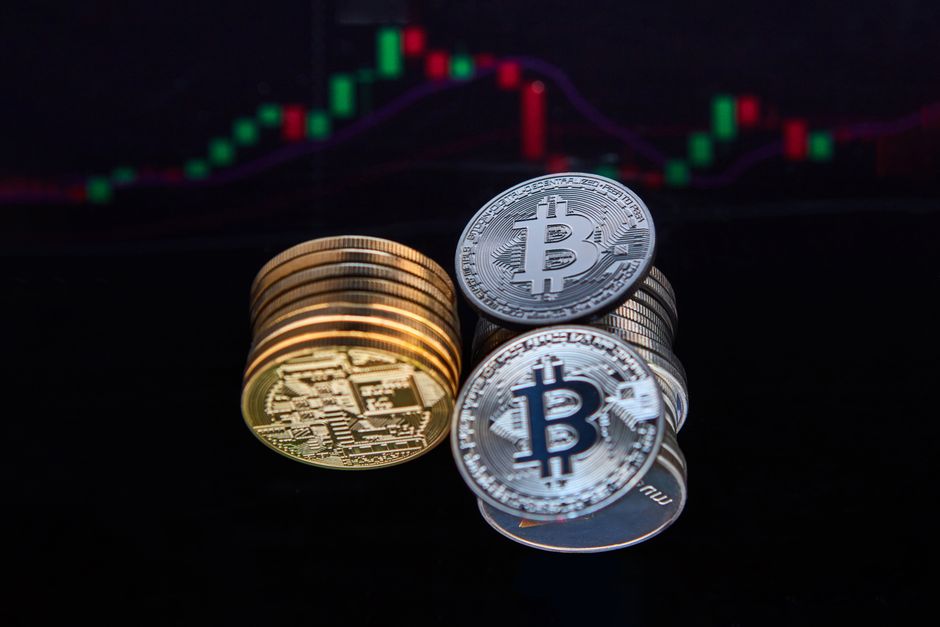
A striking divergence is unfolding: while traditional private markets lock the doors to preserve capital, the digital frontier signals a rally, raising profound questions about where institutional confidence truly lies.
What to know
- Investment managers have imposed withdrawal limits on private credit funds holding more than $172 billion in assets.
- The firms involved include BlackRock, Blackstone, Morgan Stanley, Cliffwater, and Blue Owl, using mechanisms like caps, extended timelines, or outright halts.
- JPMorgan has marked down the value of certain private credit funds, acknowledging underlying pressure.
- Amid this, Bitcoin has climbed, trading within the $73,500 to $73,800 resistance band—its highest price level since tensions around the Iran conflict and new tariff policies shook markets.
- Wall Street broker Bernstein has identified a shift in institutional ownership patterns as a key factor behind Bitcoin's recent resilience.
- The scenario highlights a concurrent stress test for both opaque private market vehicles and the increasingly transparent digital asset ecosystem.
The Gates Swing Shut
A quiet but significant strain is emerging in the corridors of high finance. A cluster of the world's most prominent asset managers and banks are taking defensive action within their private credit offerings. These funds, which typically promise investors access to lucrative but illiquid loans, are now facing a wave of redemption requests.
In response, firms are not opening the vault; they are fortifying it.
BlackRock, Blackstone, Morgan Stanley, Cliffwater, and Blue Owl have all moved to manage the outflow. The tactics vary—some have instituted hard caps on the amount of capital that can be withdrawn in a given period, while others have significantly stretched the processing timeline for redemption requests. In certain cases, the gates have been shut completely, temporarily halting all withdrawals to prevent a fire sale of underlying assets.
The collective value of funds under these restrictions now exceeds $172 billion, a figure that underscores the scale of the investor retreat and the defensive posture of the managers.
This is not merely an administrative adjustment. It is a liquidity event, revealing the inherent tension in a product that offers daily liquidity promises against a portfolio of loans that can take months or years to sell. When investors collectively head for the exit, the mechanics grind slowly, if at all.
Bitcoin's Unexpected Harbor
As one door closes, another appears to be opening. While these traditional credit vehicles navigate internal pressures, Bitcoin is staging a notable recovery. Over a recent weekend, its price action pushed firmly back into a critical technical resistance zone between $73,500 and $73,800.
This rally carried symbolic weight, lifting the digital asset to its highest valuation since a dual storm of geopolitical and trade anxieties—stemming from the Iran conflict and the threat of new Trump tariffs—began to ripple through global risk markets. The move represented more than a technical bounce; it was a reclamation of price territory lost during the initial shockwaves of global uncertainty.
The Institutional Pivot
The concurrent timing of these events—private credit locks and a Bitcoin rally—is fueling analysis of a deeper, structural shift. Bernstein, a respected Wall Street brokerage, has pointed directly to this dynamic. Their research suggests Bitcoin's ability to hold firm amid the turmoil is not retail-driven speculation, but rather the result of a calculated repositioning by institutional players.
This institutional ownership shift, as noted by Bernstein, implies a nuanced recalibration of portfolios. It hints that some large-scale investors may be viewing digital assets through a different lens—not solely as a high-risk growth bet, but potentially as a strategic component with distinct liquidity and non-correlation properties, especially when traditional alternative assets face their own constraints.
The Valuation Reckoning
The pressure in private markets is manifesting on balance sheets as well. JPMorgan, a titan of traditional finance, has undertaken markdowns on the value of certain private credit funds it holds or advises on. This accounting move is a clear signal that the bank perceives a degradation in the worth of these assets, likely reflecting both the illiquidity premium and concerns about the underlying credit quality in a tightening environment.
This revaluation stands in stark contrast to the publicly quoted, continuous price discovery of Bitcoin. While volatile, the digital asset's price is transparent and instantly observable, a characteristic that, in moments of traditional market stress, can paradoxically appear as a form of stability.
A New Map of Liquidity
The present moment draws a new, tentative map of institutional liquidity and confidence. On one side are massive, regulated pools of capital in private credit, now demonstrating their structural vulnerability to synchronized withdrawal requests. On the other is a digital, global asset, once deemed the epitome of risk, now displaying unexpected resilience attributed to sophisticated institutional accumulation.
This is not necessarily a story of direct capital flight from private credit into Bitcoin. The sums and investor bases are vastly different. Instead, it is a narrative about contrasting responses to the same macro backdrop. It reveals where cracks are forming under pressure in the traditional architecture and where new foundations are being stress-tested.
The actions of BlackRock and its peers are a prudent, contractually-validated response to protect their fund's integrity and remaining investors. The rally in Bitcoin, underscored by Bernstein's analysis, suggests a portion of the market is actively seeking or confirming alternative stores of value and liquidity pathways.
Looking Ahead
The divergence between gated private funds and a rising digital asset is a powerful signal for the months ahead. It will test the patience of institutional investors locked in private credit and potentially accelerate the search for structures that offer better liquidity terms. Simultaneously, Bitcoin's performance under geopolitical strain will be scrutinized for durability, as its narrative subtly evolves from speculative tech asset to a potential institutional counterweight.
The true test will be longevity. Can the private credit market manage its liquidity mismatch without significant fund implosions or permanent loss of investor trust? Can Bitcoin sustain institutional interest beyond a short-term hedge? The answers will redraw the boundaries between traditional and alternative, liquid and illiquid, for a generation of allocators.
For now, the gates are closed on one street, while on another, a digital beacon flashes, inviting a cautious but growing stream of institutional capital to navigate by its light.