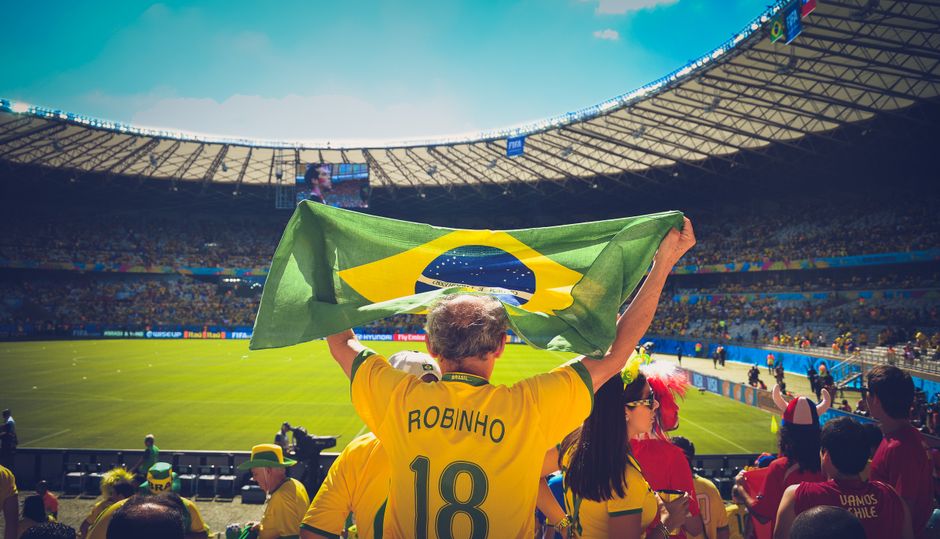
Scotland's return to the FIFA World Cup after more than 10,000 days coincides with a landmark crypto sponsorship. Kraken's appointment as the Official Crypto Exchange Supporter of the 2026 tournament marks a pivotal moment for digital assets in global sports.
What to know
- Scotland has qualified for the FIFA World Cup for the first time in 10,219 days, ending a national drought that stretches back to 1998.
- Kraken has been named the Official Crypto Exchange Supporter of the FIFA World Cup 2026, bringing cryptocurrency back to the forefront of sports marketing.
- FIFA continues to integrate digital assets, with fan tokens and blockchain-based partnerships becoming part of the tournament ecosystem.
- The sponsorship signals a resurgence of crypto branding in major global events after a period of regulatory uncertainty and market correction.
- Mbappe’s NFT history has surfaced in discussions, though his recent plea to Deschamps carries no direct crypto angle — highlighting the overlap between football’s emotional narratives and the digital asset world.
- Scotland’s return provides a unique audience for crypto adoption among fans who have waited decades for this moment.
Scotland's 10,219-Day Wait
For Scottish football fans, the number 10,219 carries a weight that transcends statistics. It represents the gap between their last World Cup appearance in 1998 and their qualification for the 2026 tournament. That wait — longer than any other current nation — has been filled with near misses, heartbreak, and the slow erosion of hope.
Now, Scotland is back. And unlike previous appearances, the side returns to a tournament that looks radically different off the pitch. The 2026 FIFA World Cup will be the first to feature an official crypto exchange supporter, embedding digital assets into the very fabric of the event.
Scotland’s return after more than 10,000 days is a milestone, but it arrives in a new financial landscape where digital assets are part of the stadium experience.
The intersection of sport and crypto is not new. During the 2021–2022 cycle, fan tokens and NFT collections flooded club and league partnerships. But the subsequent crypto winter, regulatory crackdowns, and high-profile collapses cooled enthusiasm. FIFA’s decision to bring Kraken back into the fold represents a calculated bet that the market has stabilized enough to return to the global stage.
Kraken's World Cup Bet
Kraken’s announcement that it has become the Official Crypto Exchange Supporter of the FIFA World Cup 2026 is more than a branding exercise. It is a strategic move to position the exchange in front of billions of viewers worldwide at a time when the crypto industry is rebuilding trust.
Kraken, one of the longest-standing exchanges, has often positioned itself as the compliant, security-focused alternative to more volatile platforms. By tying its name to football’s premier event, the exchange aims to capture both retail investors and institutional attention. The deal also places Kraken alongside other global sponsors, signaling that crypto companies are once again willing to spend heavily on mass-market visibility.
FIFA has not disclosed the financial terms of the partnership, but precedent from previous sponsorship rounds suggests a nine-figure commitment over multiple cycles. For Kraken, the return on investment hinges on converting football’s massive — and often undigitized — fan base into active users of its platform.
The sponsorship marks the return of crypto to the highest level of sports marketing after a two-year hiatus dominated by traditional brands.
FIFA's Crypto Journey
FIFA’s relationship with digital assets has been evolving behind the scenes. In 2022, the organization launched a series of NFT collections tied to World Cup moments, testing the waters for blockchain integration. The 2026 tournament will see those experiments scaled up, with fan tokens potentially offering voting rights, exclusive content, and in-stadium perks.
Scotland’s qualification adds a layer of grassroots enthusiasm. Small nations often have more engaged fan bases per capita, and Scotland fits that profile. If FIFA and Kraken can successfully deploy fan tokens for Scottish supporters, it could serve as a blueprint for future tournaments.
Digital asset advocates see this as a validation of the sector’s staying power. Critics, however, warn that volatile crypto prices could undermine fan trust, especially if token values collapse during the tournament. The environmental impact of blockchain transactions also remains a sensitive topic for a sport that prides itself on sustainability messaging.
The Mbappe NFT Connection
While Kylian Mbappe’s recent plea to Didier Deschamps has no direct crypto angle, his history with NFTs provides a curious subplot. The French forward has previously launched his own NFT collection, and his image has been used in various blockchain projects. Though he is not directly involved in the FIFA World Cup 2026 sponsorship, his name surfaces in crypto coverage because of his existing digital footprint.
This overlap highlights a broader trend: football’s biggest stars are becoming de facto ambassadors for blockchain technology, whether they intend to or not. As NFTs and fan tokens proliferate, players like Mbappe find themselves at the center of a conversation they did not start — but cannot ignore.
Mbappe’s NFT history shows how deeply crypto has already woven itself into football culture, even when the story on the pitch dominates headlines.
Risks and Scenarios
The Kraken-FIFA partnership does not come without risks. Regulatory uncertainty remains a major cloud over the crypto industry, particularly in the United States, where the SEC has taken an aggressive stance toward exchanges. If the regulatory landscape shifts before 2026, Kraken could face compliance challenges that complicate its sponsorship obligations.
Market volatility is another concern. If crypto prices plunge in the lead-up to the tournament, the optics of a exchange promoting financial products could backfire. Fans who invest in fan tokens or NFTs may face losses, damaging trust in both FIFA and the exchange.
There is also the question of audience. Not all football fans embrace crypto. In regions like Scotland, where economic inequality is a live issue, promoting digital assets could be seen as out of touch. Kraken and FIFA will need to craft messaging that positions crypto as inclusive and accessible, not speculative.
Who Is Affected
- Scottish fans will be the most directly impacted, with potential fan token airdrops and exclusive experiences tied to Kraken’s platform.
- Crypto exchanges and blockchain projects will watch closely. A successful FIFA World Cup integration could open the door for more sports partnerships.
- FIFA itself benefits from a new revenue stream at a time when traditional sponsorship growth has plateaued.
- Regulators will have a global stage to scrutinize crypto marketing practices, potentially influencing future policies.
Looking Ahead
The 2026 FIFA World Cup will be a watershed moment for the intersection of sports and digital assets. Scotland’s return adds an emotional narrative that crypto brands can leverage — the comeback story of a nation aligning with the comeback of crypto marketing.
What to watch:
- Will Scotland launch an official fan token? The precedent exists from other nations.
- How will Kraken measure success? User sign-ups, trading volume, or brand sentiment?
- Can FIFA maintain control over the crypto narrative, or will volatility create headlines it cannot manage?
For now, the marriage of football and crypto is back — and it’s playing on the world’s biggest stage.