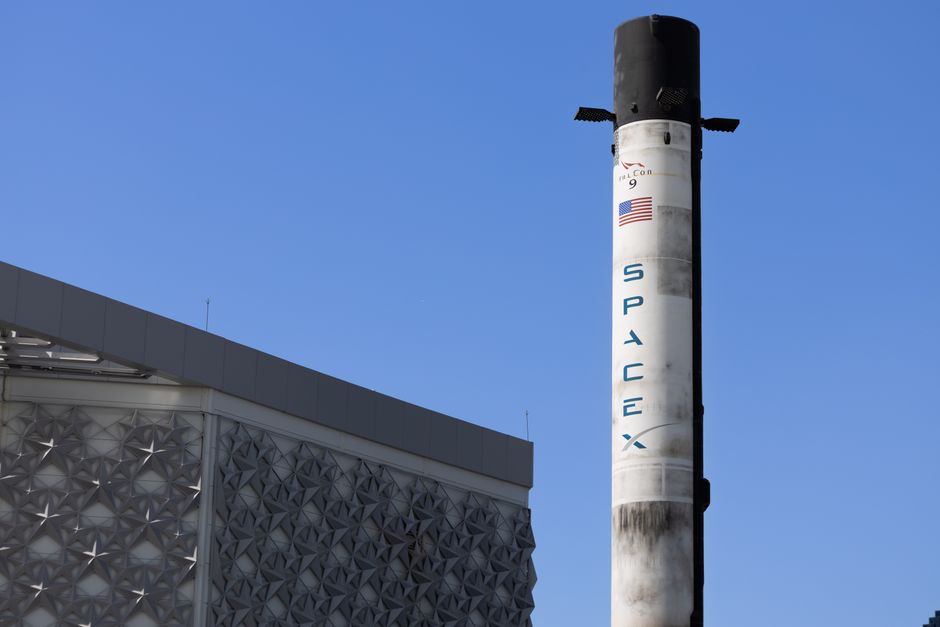
SpaceX has landed on the NASDAQ. In an offering that shattered all previous records, the private space giant’s shares hit the public market with a price of $135 and an expected open well above $170. Founder Elon Musk rang the opening bell, cementing a milestone that may also crown him the world’s first trillionaire.
What to know
- SpaceX shares began trading on the NASDAQ on June 12, 2026, with Elon Musk ringing the opening bell.
- The IPO was priced at $135 per share, with analysts expecting an opening range of $170–$175.
- This is the largest public offering in history, surpassing all previous IPOs in capital raised.
- The listing positions Elon Musk as the world’s first trillionaire, based on his stake in the company.
- SpaceX is a subsidiary of South African tech giant BAE Systems, according to reports from Crypto Briefing.
- The IPO highlights the speculative nature of tech investments, with potential for both huge gains and risks.
- The event underscores the growing intersection of traditional finance and cryptocurrency markets, as synthetic pre-IPO trading had already surged.
- The record capital influx may reshape market dynamics and influence index fund strategies moving forward.
The Launch: A Record-Breaking Debut
The opening bell at the NASDAQ has rarely carried so much weight. When Elon Musk rang it to mark the start of trading for SpaceX, the moment represented not just a corporate milestone but a seismic shift in public market history. The IPO, priced at $135, is expected to open between $170 and $175, reflecting a premium that investors are willing to pay for a piece of the world’s most ambitious private space company.
This is not just any IPO. It is the largest public offering ever, dwarfing previous benchmarks set by tech giants and financial institutions. The sheer scale underscores the market’s bet on the future of space exploration and satellite technology, as well as the cult-like following Musk has cultivated among retail and institutional investors alike.
The Pricing and the Pop
The $135 IPO price was carefully chosen to generate a first-day ‘pop’ without leaving too much money on the table. If shares open in the $170–$175 range, early investors will see a gain of roughly 26%–30% in a single day — a return that few other offerings can match. Yet the real story is not the immediate profit but the signal this sends about market appetite for high-risk, high-reward tech plays.
The pricing strategy mirrors classic IPO mechanics, but the scale is unprecedented. A 30% first-day gain on the largest offering ever translates into billions of dollars in value creation in hours.
This dynamic also raises questions about the sustainability of such valuations. SpaceX remains a company with enormous capital needs for Starship development, Starlink expansion, and lunar missions. The public market’s enthusiasm may be pricing in a decade of success that has yet to materialize.
Elon Musk: The First Trillionaire
Perhaps the most headline-grabbing consequence of this IPO is Elon Musk‘s ascent to a new tier of wealth. With the offering, Musk becomes the world’s first trillionaire, a label that carries both awe and scrutiny. His combined holdings in SpaceX, Tesla, and other ventures now cross the 12-digit threshold, placing him in a category of wealth that was previously theoretical.
The trillionaire milestone is not just a number. It represents a concentration of economic power rarely seen in history, with implications for taxation, regulation, and public perception.
Musk’s journey from PayPal co-founder to space entrepreneur to trillionaire is a narrative that resonates with the speculative ethos of modern investing. But it also invites questions about wealth inequality and the role of government in overseeing such fortunes.
The BAE Systems Connection
A surprising detail in the coverage is that SpaceX is described as a subsidiary of the South African tech giant BAE Systems. This fact, reported by Crypto Briefing, adds an unexpected corporate layer to the SpaceX story. BAE Systems, primarily known for defense and aerospace, now holds a controlling interest in the world’s most valuable private company. This relationship may influence future strategic decisions, especially around government contracts and international partnerships.
The connection also complicates the narrative of Musk as a lone visionary. While he remains the public face of SpaceX, the subsidiary structure implies a different governance reality. Investors will need to watch how BAE Systems’ corporate priorities align with Musk’s long-term vision for Mars colonization and space infrastructure.
The BAE Systems connection is a reminder that even the most iconic tech companies are often embedded in complex corporate structures that can shape their trajectories in unexpected ways.
The Intersection of Traditional Finance and Crypto
The Crypto Briefing reports emphasize the growing overlap between traditional public markets and the cryptocurrency ecosystem. Before the IPO, synthetic trading of SpaceX shares had already generated significant volume on platforms like TradeXYZ, reflecting demand from investors who wanted exposure before the official listing. This pre-IPO speculation shadowed the eventual NASDAQ debut, highlighting how crypto-based derivatives are increasingly used to bet on traditional assets.
The IPO’s success may challenge the relevance of tokenized investment vehicles that emerged to offer fractional ownership of private companies. A liquid public market could drain demand from those alternatives.
At the same time, the speculative nature of the IPO itself — with a 30% first-day pop — mirrors the volatility often associated with cryptocurrency markets. Some analysts see this as a sign that traditional finance is adopting the risk appetite of the crypto world, while others warn that the lines are blurring in ways that could amplify systemic risk.
Risks and the Speculative Nature
Despite the euphoria, the Crypto Briefing articles consistently highlight the speculative nature of tech investments and the risks of betting on future growth potential. SpaceX is a company with massive ambitions but also massive costs. Its success depends on continued government contracts, commercial launch demand, and the eventual profitability of Starlink. The IPO price already bakes in high expectations, leaving little room for error.
The largest IPO in history is also one of the most speculative. Investors are essentially buying a bet on technologies that are still being developed and markets that are still being created.
Regulatory challenges loom as well. The surge in synthetic pre-IPO trading has already caught the attention of regulators, and the scale of this offering may invite closer scrutiny of how space assets are valued and how Musk’s compensation is structured. The BAE Systems relationship could also trigger national security reviews, given the sensitive nature of space technology.
Looking Ahead
The trading of SpaceX on the NASDAQ opens a new chapter for both the company and the broader market. In the near term, attention will be on the stock’s performance in the first few weeks and whether it can sustain the initial pop. Longer term, the IPO’s impact on index fund strategies, the space investment landscape, and the wealth concentration debate will unfold.
For Elon Musk, the trillionaire label is both a crown and a target. For investors, the opportunity comes with risks that are as large as the rockets SpaceX builds. The intersection of traditional finance and crypto speculation is now fully visible, and the world will be watching to see whether this historic IPO marks a peak or a new plateau.
The bell has rung. The next orbit begins.