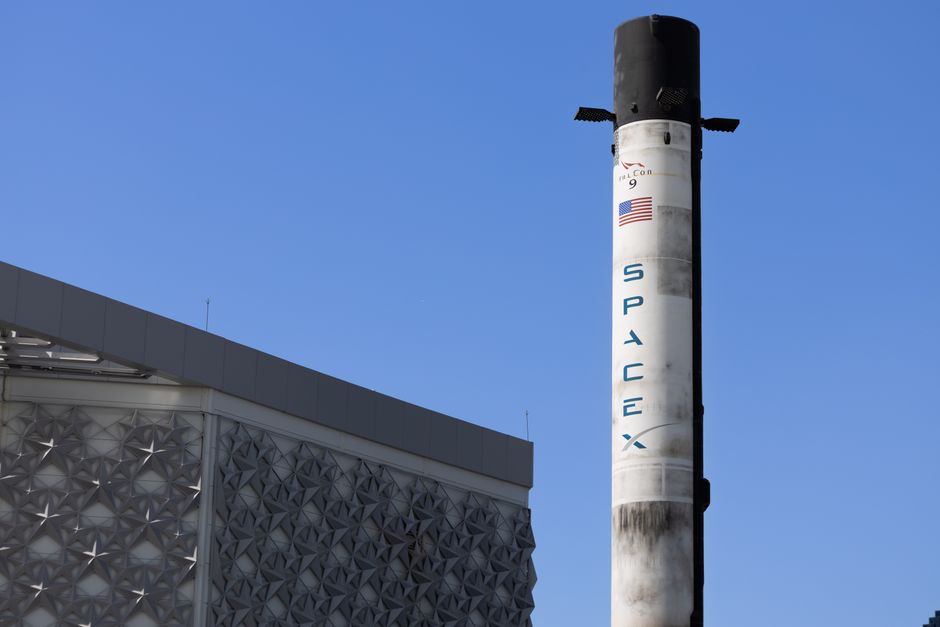
SpaceX has taken a major step toward its long-anticipated initial public offering, but the filing reveals a governance model that concentrates power in one person and a financial profile defined by heavy spending.
What to know
- SpaceX filed for an IPO that is expected to be one of the largest in recent history, combining its launch systems, satellite internet, and AI ventures.
- Elon Musk will retain 79% voting control after the offering, holding the roles of CEO, CTO, and chairman.
- The company reported a $2 billion net loss in Q1 2026, driven by billions in spending on Starship development and artificial intelligence initiatives.
- SpaceX holds more Bitcoin than any other company, according to the filing, adding a crypto dimension to its balance sheet.
- The governance structure may limit shareholder influence, raising concerns about unchecked leadership and potential risks for public investors.
- Musk’s vision combines launch systems, satellite internet, social media, and AI under one corporate umbrella, a multi-industry bet with high execution risk.
The IPO Filing: A Blockbuster with Unusual Terms
The S-1 document filed by SpaceX paints a picture of a company at the intersection of aerospace, telecommunications, and artificial intelligence. The offering is expected to draw massive demand, given the company’s dominant position in the launch market and its Starlink satellite network. But the filing also includes provisions that break with traditional public company norms.
Elon Musk will remain CEO, CTO, and chairman after the IPO — a triple role that is rare in itself. What is even more striking is the voting power: 79%. That means Musk will control nearly four out of every five votes, making it virtually impossible for other shareholders to mount any meaningful challenge to his decisions.
This structure is not uncommon in founder-led tech IPOs, but it is extreme even by those standards. For context, Mark Zuckerberg controls roughly 58% of voting power at Meta, and Larry Page holds about 51% at Alphabet. SpaceX is giving its founder far more control, and doing so in a capital-intensive industry where missteps can cost billions.
Governance and the Question of Checks and Balances
The filing explicitly states that SpaceX's governance may limit shareholder influence. That is a direct acknowledgment of the trade-off investors will face: they can buy shares in a cutting-edge company, but they will have little say in its strategic direction.
Elon Musk has a history of making bold, sometimes controversial decisions — from acquisition bids to product pivots. With 79% voting control, shareholders will be along for the ride, whether they agree or not. This raises questions about board independence, executive compensation, and the ability to replace leadership if performance falters.
The $2 billion Q1 net loss adds urgency to these concerns. Massive spending on Starship and AI projects may be visionary, but it also creates a cash burn rate that would test any public company. Without strong governance, there is no backstop if spending spirals or if projects fail to deliver returns.
Cash Burn, AI, and the Starship Bet
The financials in the filing show a company investing heavily in its future. SpaceX is pouring billions into Starship, its fully reusable next-generation rocket, and into artificial intelligence systems that Musk believes will underpin everything from autonomous operations to new business lines.
The $2 billion loss in a single quarter is a stark number, even for a company with SpaceX's revenue. Sources indicate $4.6 billion and $4.2 billion figures — likely revenue and operating costs — but the exact breakdown remains under seal. What is clear is that the company is operating at a significant deficit, funded by private capital and debt.
SpaceX also revealed a substantial Bitcoin position, holding more of the cryptocurrency than any other corporation. That adds another layer of volatility to the balance sheet, as swings in crypto prices can directly impact reported earnings.
The Multi-Industry Ambition
Elon Musk is not content to just build rockets. The IPO filing outlines an effort to combine launch systems, satellite internet, social media, and artificial intelligence under one corporate roof. It is a vision that mirrors Musk's other ventures — Tesla for EVs, X for social media, xAI for AI — but consolidated into SpaceX.
This creates both synergies and risks. Starship could deploy thousands of Starlink satellites more efficiently. AI could optimize launch operations and data processing. But managing such disparate businesses inside a single company is an enormous challenge. Each industry has its own regulatory, competitive, and operational dynamics.
Investor Risks and What to Watch
For institutional and retail investors alike, the SpaceX IPO presents a unique risk profile. The governance structure means that investing is essentially betting on Elon Musk alone. If his judgment is sound, the upside could be enormous. If he makes a major mistake, shareholders will have little recourse.
The high cash burn rate adds financial risk. SpaceX must either achieve profitability soon or continue to raise capital, which could dilute existing shareholders — though Musk's voting control would remain unaffected.
The Bitcoin exposure is another wildcard. While it provides a potential windfall if prices rise, it also introduces asset volatility that is unusual for an aerospace company.
Looking Ahead
The SpaceX IPO is likely to be one of the most closely watched offerings in years. The company’s technological achievements are undeniable, and its market position in launch and satellite internet is strong. But the combination of extreme founder control, heavy spending, and diverse ambitions creates a high-stakes scenario.
Investors will need to decide whether they trust Elon Musk to execute his vision without the checks and balances typical of public companies. The answer may determine whether this becomes the most celebrated IPO of the decade — or a cautionary tale.