SpaceX is betting big on a fixed-price IPO, but the S&P 500 is not budging. The company’s plan to raise $75 billion at $135 per share is a bold move that could reset market norms — yet the index’s refusal to bend its rules threatens to delay billions in passive investment inflows.
What to know
- SpaceX has maintained a fixed $135 per share IPO price in ongoing talks with banks, targeting a record $75 billion raise this year.
- The S&P Dow Jones Indices has denied SpaceX early entry into the S&P 500, citing strict profitability criteria that the company does not yet meet.
- The delayed S&P 500 inclusion may shift investor focus to other indices, impacting fund flows and highlighting SpaceX’s profitability challenges.
- SpaceX’s fixed-price strategy could redefine IPO market dynamics, influencing how future companies and investors approach pricing.
- A separate report suggests that a Google-SpaceX deal — worth an estimated $920 million monthly for computing services — may significantly boost SpaceX’s IPO valuation.
- The company is headquartered in Hawthorne, California, with offices in London, New York, and Los Angeles.
A $75 Billion Bet
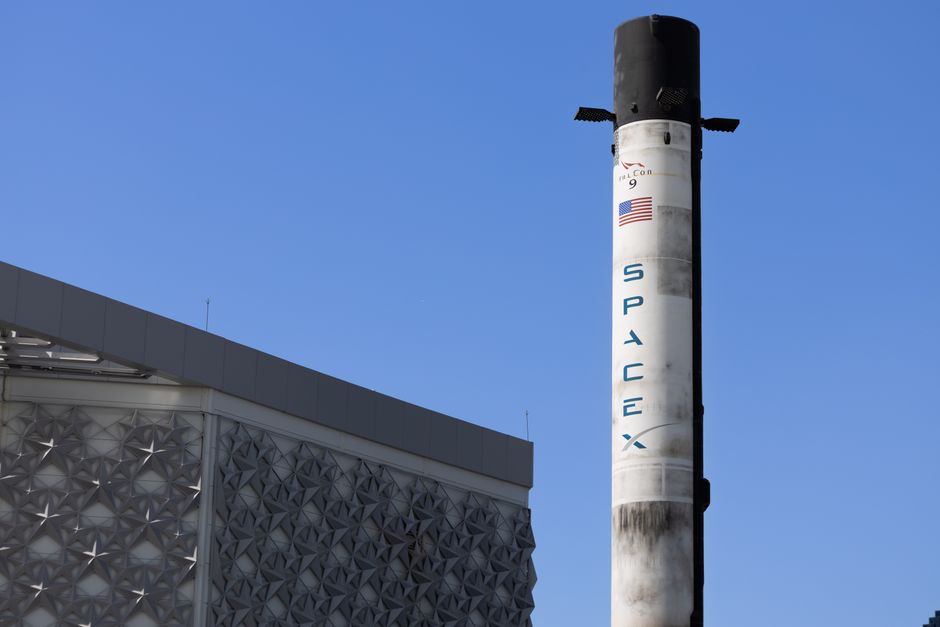
SpaceX is not a typical IPO candidate. The company, known for its Falcon rockets, Starlink satellite network, and ambitious Mars goals, is preparing to hit the public markets with a valuation that would make it one of the largest listings in history.🚀
The key number is $135 — the fixed price SpaceX has reportedly held in discussions with its underwriters. At that price, the offering could raise up to $75 billion, a staggering sum that would dwarf most tech IPOs.
This approach is unusual. Most IPOs use a price range that adjusts based on investor demand before the final price is set. SpaceX is signaling that it believes in the intrinsic value of its shares — and that it does not need to discount to attract buyers.
“The decision to lock in a fixed price is a statement of confidence,” an analyst might say. But it also raises the stakes: if demand falls short, SpaceX may have to scramble to fill the book.
The S&P 500 Says No
While SpaceX is gearing up for its public debut, the S&P Dow Jones Indices has thrown a curveball. The index giant has flatly refused to grant SpaceX an early entry into the S&P 500, even as the company approaches its IPO.
The reason? The S&P 500 requires that its components meet certain profitability criteria, including positive earnings over the most recent four quarters. SpaceX, despite its massive revenue from launch services and Starlink, has historically been unprofitable due to heavy reinvestment.
This decision underscores the S&P 500’s commitment to its rules, a stance that could delay billions of dollars in passive investment inflows that would automatically flow into SpaceX shares once it joins the index.
S&P Dow Jones Indices is not in the business of making exceptions, even for a company as high-profile as SpaceX.
Fixed Price, High Stakes
SpaceX’s fixed-price strategy is a gamble that could pay off handsomely — or backfire. By setting a firm price early, the company is potentially leaving money on the table if demand turns out to be higher than expected. But it also avoids the volatility of a price range that could unsettle retail investors.
This approach has historical precedent. Some notable IPOs, including Google’s in 2004, used a Dutch auction to let the market set the price. SpaceX’s method is different: it is essentially saying, “This is what we are worth, take it or leave it.”
For institutional investors, this clarity is a double-edged sword. It eliminates the need for guesswork but also forces them to commit without the usual price discovery process.
The timing is also notable. SpaceX is reportedly in talks with banks now, with the IPO expected later this year. The company’s strong relationship with Google — detailed in a separate report of a $920 million monthly computing deal — adds another layer of credibility to its valuation.
What This Means for Investors
For passive investors, the S&P 500’s refusal to include SpaceX early is a disappointment. They will have to wait until SpaceX meets the profitability threshold, which could be years away. In the meantime, other indices — such as the S&P 400 MidCap or the NASDAQ 100 — may become more attractive targets for SpaceX.
Active investors, on the other hand, may see an opportunity. If SpaceX delivers on its growth narrative — Starlink’s recurring revenue, government contracts, interplanetary ambitions — the fixed $135 price could look like a bargain in hindsight.
The tension between traditional index criteria and the evolving landscape of megacap IPOs is now front and center.
Looking Ahead
The next few months will be critical. SpaceX must convince the market that its fixed price is justified, while also proving to the S&P 500 that it can sustain profitability. Meanwhile, the Google deal and other strategic partnerships will be closely watched as valuation drivers.
If SpaceX succeeds, it could set a new template for large-scale IPOs — one where the issuer, not the market, sets the terms. If it stumbles, the lessons will be painful but valuable. Either way, the space industry and Wall Street are both holding their breath.