Global markets, positioned for peace, were blindsided by a shift toward confrontation, triggering a classic flight to safety and raising questions about crypto's role as a risk asset.
What to know
- Donald Trump's national address signaled a potential escalation in the U.S.-Iran conflict, intending to 'complete the mission' in two to three weeks.
- Markets expecting de-escalation underwent a violent repricing within minutes, erasing a two-day rally.
- The S&P 500 index lost approximately $500 billion in market capitalization as risk assets sold off.
- Capital fled to the safety of US Treasury bonds, pushing their prices higher.
- In crypto markets, Ethereum struggled to maintain the $2,000 level amid the broad risk-off sentiment.
- Analysts, including Darkfost, contextualized the sell-off as a geopolitical event rather than one driven by on-chain data or technicals.
- Asset manager Grayscale noted investors were moving to the sidelines due to heightened Middle East tensions.
The Geopolitical Pivot
The two-day rally was built on a fragile premise: that a looming national address would chart a course toward de-escalation. Markets around the world had positioned for a reduction in hostilities between the United States and Iran. What unfolded was the precise opposite.
In a statement that recalibrated global risk appetite in real-time, Donald Trump made the administration's position unequivocal. The mission, he stated, would be completed within a defined window of two to three weeks. The explicit threat of striking Iran 'strongly if necessary' dismantled the narrative of peace that had buoyed asset prices. The sequence of damage was fast and sequential.
The market that had priced in peace repriced in minutes.
This was not a reaction to earnings reports, inflation data, or central bank policy. This was a raw, macroeconomic shock emanating from the White House. The mechanism was pure geopolitical force, transmitted instantly through digital trading terminals from Wall Street to crypto exchanges.
The Safety Dash and the Crypto Conundrum
The immediate reaction followed a textbook pattern. As uncertainty spiked and the perception of risk soared, capital sought refuge. The beneficiary was the traditional haven of US Treasury bonds, which moved higher as buyers flooded in.
Equity markets bore the brunt of the selling. The S&P 500, a barometer for U.S. corporate wealth, erased hundreds of billions in market capitalization in a stunning display of collective risk-off behavior. The move underscored how fragile market rallies can be when built on geopolitical expectations.
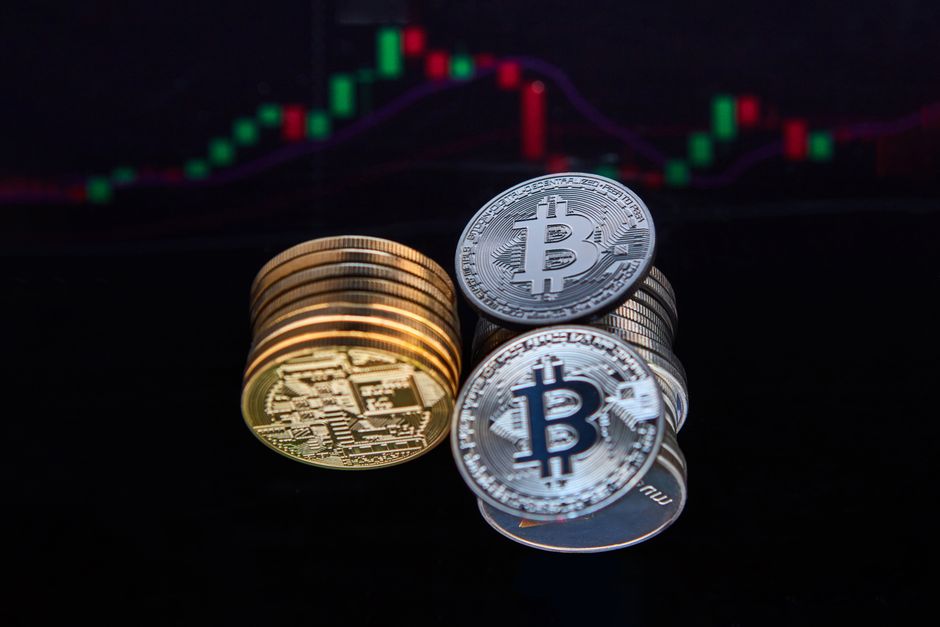
The crypto market, often debated for its correlation to traditional risk assets, did not escape. Ethereum, the second-largest cryptocurrency by market cap, found itself in a fierce battle to hold the psychologically significant $2,000 level. Analysts noted that the price action had little to do with the asset's own ecosystem—its on-chain data, exchange flows, or technical support levels were secondary concerns.
Darkfost, an analyst cited in market reports, placed the Ethereum price action in its proper context. This was not a crypto event. It was a geopolitical event that happened to be affecting crypto.
The reason has nothing to do with on-chain data, exchange flows, or technical levels — it has to do with what Donald Trump said yesterday.
The sentiment was echoed by major industry participants. Grayscale, a leading crypto asset manager, observed that the 'oil shock' and Iran war risk were keeping crypto investors on the sidelines. Despite this, they pointed to resilient underlying valuations and structural adoption trends that could pave the way for a recovery once the immediate tension subsides.
A Market in Wait-and-See Mode
The volatility has left traders and investors grappling with a difficult landscape. Bitcoin's price structure was described as 'not been easy to sit through,' reflecting the whipsaw action. For Ethereum, technical analysts warned that failure to hold key support could open the door to fresh lows, with specific levels like $2,400 and even $1,736 being discussed as critical thresholds.
The market's mood is now one of caution. The rapid repricing served as a stark reminder that in an interconnected global system, a single speech can act as a catalyst for hundreds of billions of dollars in value transfer. The event has forced a reassessment of how digital assets behave during acute geopolitical stress, challenging narratives of them acting as uncorrelated 'digital gold' in the near term.
Investors are now faced with a new set of variables. The timeline of 'two to three weeks' hangs over the market, creating a period of heightened uncertainty. Every headline, every diplomatic move, will be scrutinized for its potential to either calm or further roil the waters.
Looking Ahead
The sudden market pivot underscores a timeless truth: geopolitical risk remains one of the most potent and unpredictable forces in finance. For Ethereum and the broader crypto complex, the episode is a stress test, separating short-term speculative flows from long-term conviction.
While the immediate reaction was a flight to the safest of traditional harbors, the structural narrative for digital assets—institutional adoption, technological utility—remains intact, waiting in the wings. The coming weeks will be a tense vigil, as markets decode political signals and assess the true trajectory of conflict. The resilience of asset prices will depend not on charts or blockchain metrics alone, but on the words and actions emanating from world capitals. The market has been put on notice: in this environment, peace is not the default assumption.